WHAT'S NEW?
Loading...

After putting Tizen on smartphones and smart TVs, Samsung has installed its self-developed OS into outdoor signage for the first time.


Samsung has unveiled indoor and outdoor signage that is powered by its own Tizen operating system (OS) -- the first time the platform is being used outside of smartphones and TVs.

Samsung puts Tizen into signage for the first time


The South Korean tech giant has previously stressed that Tizen would be a platform that will be used outside the smartphone. Cameras and tablets with the OS were launched first in 2013. The Z1, the first commercial phone with the platform, launched in India in 2015 and was a considerable success.

It has installed the OS on the majority of its TVs since 2015 as well.

Shown at Infocomm 2016 in Las Vegas, the indoor signage, part of its P series, is 29.9mm thin and comes in 700 nit and 500 nit versions. The outdoor signage of its OHF series has a PC embedded in it and is IP56 water- and dust-proof.

The company said it has changed the UX on the new signage accompanying the change to Tizen. It supports HTML5, its own API, and Samsung Smart Signage Platform, a service program that help clients manage their signage.

Samsung said it plans to expand the application of the Tizen platform on more of its smart signage lineups.

The company is expanding its enterprise display business, which includes signage, LEDs, and new technology.

It installed a large LED scoreboard for a ballpark in South Korea in April, and last month installed mirror displays in a barbershop franchise in the country.

Source
As one of the world's biggest electronics manufacturers, Samsung is an important partner if you're trying to get traction for a nascent operating system. When it comes to smartwatches, Google will have to make do without the Korean juggernaut—Samsung says it's done with Android Wear.

Samsung is done with Android Wear watches, says Tizen is the future


After a chat with Samsung executives, a report from Fast Company says that "no more Samsung Android Wear devices are in development or being planned." Samsung apparently sees its in-house operating system, Tizen, as the wearable future. The report says that Samsung executives are going with Tizen because it's "far more battery-efficient than Android Wear" and "the standard OS on other Samsung products from TVs to refrigerators."
Samsung has given Android Wear a single try: the square "Galaxy Gear Live" smartwatch, which was one of the first Android Wear devices. For Tizen, the company has released the Gear S2, the Gear S, the Gear 2, and the Galaxy Gear. Android Wear recently launched a developer preview of version 2.0, which features an all-new design, new text input options, and more standalone functionality for watches with LTE modems.

Without Samsung in the mix, the Android Wear has seen hardware entries from Motorola, Huawei, LG, and even regular watch brands like Tag Heuer. Tizen, on the other hand, has a single hardware vendor: Samsung. Can Tizen really survive with only Samsung behind it?

Update: Samsung responded to this with the following message: “Samsung has not made any announcement concerning Android Wear and we have not changed our commitment to any of our platforms.”

Source
Many alternative mobile operating systems like Firefox have fallen by the wayside while Android and iOS continue to dominate, but Samsung's Tizen has survived.

After years of inactivity, Tizen is now back on the map with a major OS upgrade. A new version of the OS -- Tizen 3.0 -- was announced this week at the Samsung Developers Conference in San Francisco.

Samsung's Tizen 3.0 to take on Android and iOS starting in September


Tizen 3.0 is a big technological upgrade that should make it compatible with some of the latest smartphones and tablets. Other improvements prime the OS for installation in smart appliances, wearables, in-car entertainment systems, drones, TVs, and virtual reality headsets.

Tizen 3.0 will be a 64-bit capable OS, like iOS and Android. It will work on devices with some of the latest 64-bit ARM and x86 processors.

A beta release of Tizen 3.0 may come in July, with a final release planned for September. Devices with the OS will ship later, though Samsung couldn't nail down a specific date.

Tizen 3.0 will work with 4K screens, and it could be a good gaming platform with its support for Vulkan APIs. The graphics engine in Tizen 3.0 is 30 percent faster than the one in the older Tizen 2.4 OS.

Tizen was first announced in 2012 as a mobile OS but has been considered a failure in that market. Two smartphones with the older Tizen 2.4 shipped in India, said Mohan Rao, senior vice president at Samsung.

Samsung is using Tizen in smart TVs and wearables like the Gear S2. Rao hinted at a continued mobile focus with Tizen 3.0 but said the operating system's future could be in the emerging Internet of Things market.

Tizen 3.0 is "IoT ready" and will power smart refrigerators, light bulbs, washing machines, and even vacuum cleaners, Rao said. Samsung could start shipping home appliances with the OS

Samsung estimates 21 billion connected devices will be in the market by 2020. Tizen 3.0 will be compatible with Samsung's Artik developer boards, which can be used to make smart devices. Samsung this week also announced Artik Cloud, which offers cloud services for IoT devices.

Tizen 3.0 is similar to Windows 10, in that a developer can write applications that can work with large- and small-screen devices. The OS is based on the Linux LTS (long-term support) kernel, making it stable.

Key improvements in Tizen 3.0 include support for Bluetooth 4.2, which is central to communication between IoT devices. The OS also supports Open Connectivity Foundation's IoTivity protocol, which allows for easy pairing of compatible devices.

The OS will have APIs for face and emotion recognition. It will have voice control, as well as engines to convert speech to text and vice versa. With voice control, developers could add voice-activated assistants, much like Cortana in Windows PCs and Siri in Apple's iPhone.

Tizen 3.0 is also more secure compared to the previous version. It will have an antivirus framework for screening content and applications.

Source
The Tizen Alliance, which was established by Samsung and Intel to develop the third operation system (OS), is tottering as its key member companies are leaving the alliance one after another. Although there were more than 10 board members of the board of directors at the beginning, there are only 4 left now. Apart from Intel, they are all Korean firms.

Number of Member Companies in Tizen Alliance Decreases from 10 to 4


According to industry sources on May 18, the current official board members in the Tizen Alliance are Samsung Electronics, Intel, SK Telecom and LG U+. Japan’s Fujitsu left the board, while KT, NTT Docomo, Orange Telecom and Huawei withdrew from the official board members to advisory board members.

Tizen is the next-generation OS developed by Samsung Electronics and Intel from 2012. The OS was known as a mobile OS which can vies with Apple’s iOS and Google’s Android at the beginning, but it has ultimately seeking to become a comprehensive open source platform which connects various devices, such as smartphone, tablet, smart TV, wearable and cars, based on the Linux.

Japanese companies which were the most passionate at the early stage of the founding changed its stance. NTT Docomo served as a co-chairman in the early days of the Tizen launch and was the most enthusiastic member, but it currently shows no activities. NEC, an early board member, also left the alliance in 2014.

Huawei, which leads the Chinese market, is also rarely participating in. An official from Huawei said, “The company is not taking part in the Tizen OS at the moment. This is largely due to the fact that Huawei changed its direction with its self-developed OS.” Huawei unveiled its OS for the Internet of Things (IoT) last year, focusing on the development of its own OS.

Unlike the past, Intel is also lukewarm over the participation. Intel changed its Tizen manager four times until now and its position level downgraded from the vice president level at the beginning to the director level now. Industry watchers believe that Intel is unlikely to use Tizen as it is also developing its own IoT platform.

Samsung Electronics is struggling by himself to get the Tizen Alliance on its feet again. The company, which is expanding the Tizen OS to wearable and smart TV as well as smartphone, plans to expand its application further to in-car infotainment system to smart phone.

Source
Two Samsung devices, the rumored Galaxy Tab 4 Advanced and the Galaxy J2 (2016), have recently been spotted at two different benchmarking sites, hinting at their upcoming arrival. Amid talks and leaks circulating about a number of smartphones, Samsung Z5 joins  the list of rumored Samsung devices.

Samsung Z5 release date, specs news 2016: Another Tizen OS-based smartphone nearing launch?


A Samsung Z5 was recently spotted on Zauba, a website that lists products entering India. According to the listing, 310 units of a mobile phone codenamed "SM-Z510FD" have been imported from Vietnam. The handset was described as "ASSY METAL REAR UNIT," which was presumed to mean that it would feature a full-metal build and if not, at least mostly metal.

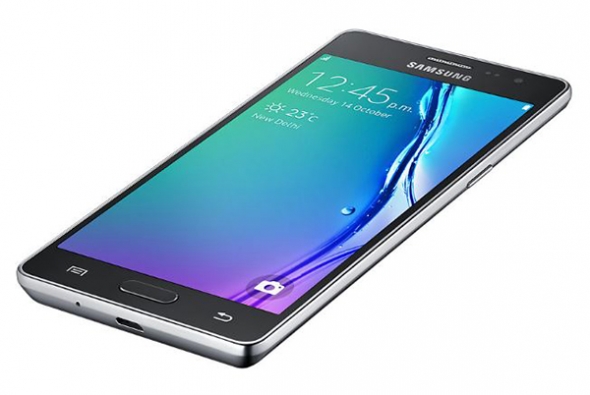
The Samsung Z5 is expected to come out with Samsung's Tizen operating system (OS), which was first seen in the Samsung Z1 and again in the Z3. Furthermore, the Z5 is expected to bring the third version of the OS.

The rumors surrounding the Z5 handset suggest that the handset will be powered by a quad-core processor clocked at 1.5 GHz and 2 GB of random access memory (RAM). Included in the rumored internal specifications is the 8 GB expandable storage and 3,000 milliampere hour (mAh) battery. As for the design, a 5 megapixel (MP) snapper is rumored to sit at the top of a 5-inch display while an 8 MP main camera adorns the back.

The Samsung Z3 targets the mid-market, so fans are expecting the Z5 to do so as well. The Z1 and Z3 were first released in India, but later on spread to neighboring countries such as Bangladesh and Sri Lanka. These Tizen-based smartphones are not readily available in the United States, and reports state that it is unlikely for the Z5 to come to the Western shores.

Samsung hasn't officially announced a release date, but if the launch dates of previous Samsung Z devices were taken into consideration, industry watchers can expect to see the phone in the market by the fourth quarter of 2016.

Source
WhatsApp has become one of the biggest messaging apps around the world, with around one billion users as of February 2016. Its popularity isn’t really surprising since the app allows users to text and call their friends and family members and exchange pictures and videos no matter where they are in the world. The best thing about the app is that it’s completely free; it used to cost $0.99 per year, but the company scrapped this pricing structure so users no longer need to pay a monthly or yearly fee to use the app.

WhatsApp is available for a wide range of phones, and these include Samsung’s budget cheap phones like the Z1 and Z3, both of which run on the Tizen OS. If you have one of these phones and would like to enjoy WhatsApp, you’ll need to take several steps to download and install it in your phone.

Getting WhatsApp for Your Samsung Tizen Phone


If you have a Samsung Z1, for instance, you can download the app from the Tizen Store. If it’s your first time to download applications from the store, you’ll need to create an account and download an app called “ACL for Tizen” (which is short for Application Compatibility Layer). After installing and enabling the app, go to the Tizen Store and search for WhatsApp. Follow the instructions on the screen to download and install the app on your phone and start using it.

If you already have WhatsApp on your Samsung budget phone, you’ll want to watch out for updates and download the latest version of the app ASAP. Doing this is important so you can enjoy the latest features that WhatsApp would release while ensuring that any bugs in the app would be fixed.

As of the moment, the latest version is WhatsApp 2.12.17, which you can download from the Tizen Store. The update is said to install security features in the app, improve the design for browsing photos and videos, and provide solid colors as background for chats. It also allows you to zoom in on videos while they’re playing, save incoming media for certain chats, and pull down in-app notifications so you can easily reply to messages.

WhatsApp 2.12.17 doesn’t yet allow Tizen phones to make Voice Calls. If you had signed up for the WhatsApp Call Beta, you’ll lose the capability to make voice calls on WhatsApp when you download the latest update. This can be depressing and may tempt you not to update the app, but upgrading to 2.12.17 is recommended since it provides you with additional security.

Source
Facebook’s original intention when designing React Native was to give its developers a way to build single-page apps using the React platform. They could then build native mobile apps for Android and iOS using React.

Facebook’s React Native gains Windows and Tizen support


During the F8 developer conference, Facebook announced that React Native has already been used by over 500 companies and developers to publish apps on Apple’s App store and by over 200 companies and developers to publish apps on Google’s Play store.

Due to the success of the platform on both iOS and Android, Microsoft and Samsung have also decided to bring React Native to Windows 10 and to Samsung’s Tizen OS. Now, developers will be able to use the framework to create apps for the Universal Windows Platform which means their apps will be able to run on desktops, laptops and on Windows 10 mobile. Samsung’s Smart TVs and smartwatches run its Tizen OS so developers be able to reach even more markets by building their apps using Facebook’s React Native platform.

The Facebook SDK will also be added to React Native as well. Apps built using the framework will now have access to many standard Facebook features such as Sharing, App Analytics and Facebook’s Graph API.

At the F8 conference last year Facebook decided to make React Native and open source project. As a result of this, over 600 developers have added code to the framework’s codebase over the last year. According to Facebook more than 250,000 developers have the React tools which make up the basis of React Native currently installed on their systems.

Source